
Sound attenuator enquiry guide
Bring acoustic criteria, airflow, connection sizes and installation constraints together before requesting attenuator selection data.
Describe the system and acoustic requirement
Identify the duct system, equipment served and intended attenuator location on a drawing. Include the acoustic requirement issued by the project designer or acoustic consultant, keeping its units and frequency information where provided. Distinguish source information from the target requirement so they are not read as the same value. If the BOQ simply asks for a sound attenuator, request the missing selection criteria. A generic noise complaint is useful context but does not define the required product performance.
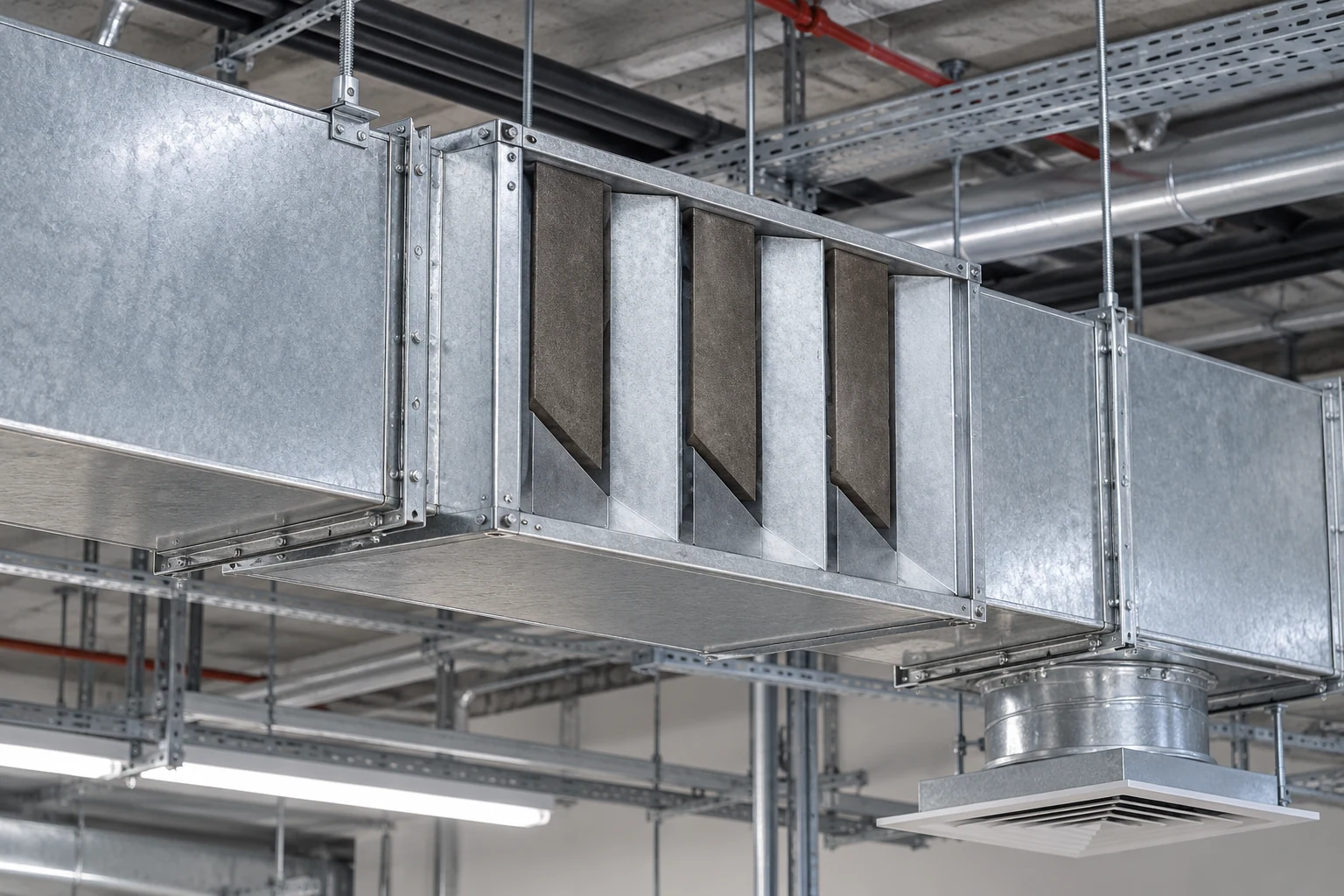
Record airflow and physical constraints
Provide the design airflow with units, connection dimensions and available overall length, width and height. Show the intended orientation and nearby duct changes or equipment connections. Include the pressure-drop limit if one is specified by the project team. SKYRO lists sound attenuators in GI construction; confirm the proposed configuration and any additional material requirement separately. Do not substitute a shorter unit solely to fit the space without obtaining a review of the applicable selection information.
Ask for a proposal that can be reviewed
Request an outline drawing and the acoustic and pressure-drop data needed to assess the proposed attenuator. Keep the quotation linked to the stated airflow and configuration so later changes can be identified. Record installation access, support interfaces and associated work as separate coordination items. Before ordering, have the responsible project team compare the proposal with the required acoustic criteria and available space. No attenuation value can be inferred from a product photograph or a catalogue name alone.
Before you contact SKYRO
- Identify the system, equipment and attenuator location.
- Attach the acoustic criteria and available source information.
- State design airflow and any specified pressure-drop limit.
- Label connection sizes and available overall dimensions.
- Request selection data and an outline drawing for project review.
Explore the relevant products
Discuss your product requirements.
Share your product schedule, dimensions, quantities and project location. Attach the relevant drawings or BOQ privately through the enquiry form.
Connect with the SKYRO team ↗BUYER QUESTIONS
Useful answers before you enquire.
Can duct dimensions alone select a sound attenuator?
No. Include airflow, acoustic criteria, available space and the specified pressure-drop requirement so the proposed configuration can be assessed with applicable data.
What should I send if I only know the room is noisy?
Describe the system, location and operating conditions. Ask the responsible designer or acoustic professional to define the information and criteria needed for selection.
Should I include frequency-specific acoustic information?
Include it when issued by the project team, with the original labels and units. Avoid replacing a detailed requirement with a single unqualified number.
Can the attenuator be shortened to fit the ceiling?
Show the available space and request review of the revised configuration. Physical fit alone does not demonstrate that the acoustic and pressure requirements are met.
Which documents help compare a proposed attenuator?
Request the outline dimensions and applicable acoustic and pressure-drop data for the proposed configuration and airflow. Have the project team review them against the specification.